Last updated: 14 October 2026
The West of England line is an important part of our network that links London with Hampshire, Wiltshire, North Dorset, Somerset and Devon. It serves a total of 21 stations over 120 miles and provides vital connectivity for regional centres such as Salisbury, Yeovil and Exeter, and many local communities in between.
We recognise that the line is different to the other routes on our network in terms of its length, geography and rolling stock, which bring a range of challenges.
West of Salisbury, the predominantly single-track line has only six passing points, which constrains services and makes it harder to recover when we experience disruption.
As we have seen in recent years, the West of England line is also vulnerable to extreme weather and most critically, the trains serving the route are ageing diesel units that are coming to the end of their operational lives.
It can be challenging to operate train services on this line because of the long sections of single track from Salisbury to Exeter, the trains that we use, and the impact that climate change is having.
This page provides information on those challenges and what we are doing to tackle each of them, as well as information on some of the other issues we are currently facing.
Latest updates – October 2026
Our Managing Director Lawrence Bowman has provided an update on the West of England line in the video below.
Operating train services
Unlike most of our network, the 124 miles from Basingstoke to Exeter St Davids is not electrified and we can only use diesel trains. Around 60 miles is single track, which severely constrains the way we operate train services and makes it harder to respond to disruption.
To run an hourly service between London Waterloo and Exeter St Davids, there are only six places for trains to pass each other, and they must reach those places at the right time. Even a minor delay by one train can quickly become a major delay to many others, as this video explains.
Challenging conditions
The line between Salisbury and Exeter was built in the mid-1800s by engineers who constructed railway embankments using the soil they had dug out from the steep cuttings they were carving.
They did not have the specialist knowledge of today’s geotechnical engineers, who know much more about the way soil and rock behave when structures are built on them, and have a far greater understanding of different soil types.
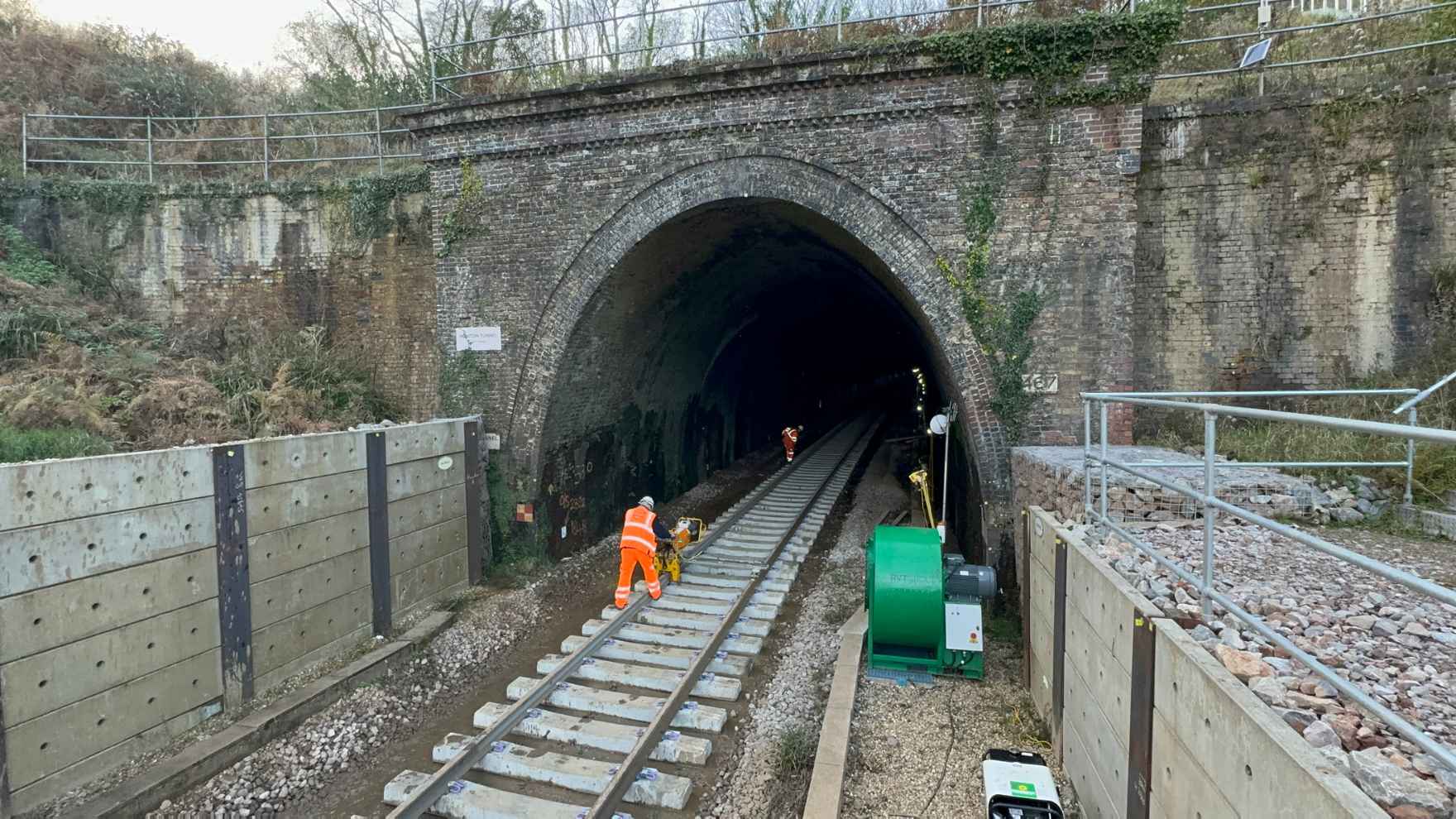
Engineers installing new track at Honiton tunnel in 2024. The walls next to the track are to prevent landslips.
Today we know that steep cuttings are more at risk of landslips during very heavy rain, and that the soil in the south west of England contains a lot of clay, which expands in wet conditions and shrinks in dry and drought conditions.
Climate change and Soil Moisture Deficit
Because of the way the line was built it is particularly vulnerable to climate change. We are seeing very hot temperatures much more frequently and this can lead to Soil Moisture Deficit, when the ground cracks and disrupts the precise levels of our tracks.
On Monday 10 August we introduced a temporary timetable due to speed restrictions between Salisbury and Exeter, to keep customers moving safely and reliably.
Following the UK’s hottest and driest summer ever, and with the region still in drought, we are still waiting for significant rainfall to restore moisture to our clay embankments. It is likely to take some time before we are able to safely restore the full timetable.
As you can see in the graph below the soil is still extremely dry, much drier than at the same point last year when we were also operating a temporary timetable.
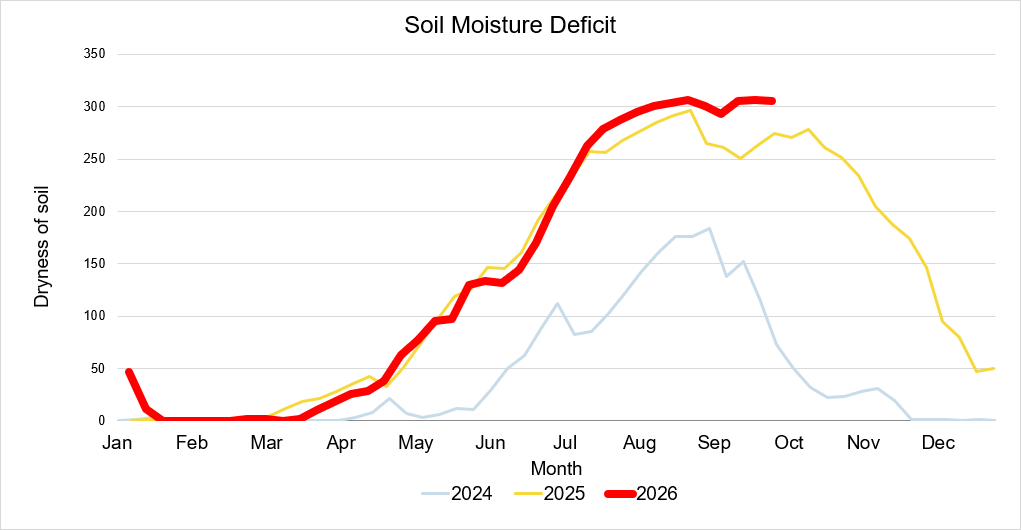
While we know the reduced frequency of services and longer journey times are frustrating, we are pleased that the temporary timetable is operating much more reliably, with cancellations down to under 2% last month.
Our maintenance teams are regularly tamping and repacking the embankments to keep the quality of the track as high as possible, which will reduce further disruption and delays
Our Trains
Our Class 158 and 159 trains are going through a refurbishment programme to ensure they continue to operate safely, reliably and comfortably. As part of the programme, each train will receive:
- Refurbished, more comfortable seats in both standard and first class
- New carpets and vinyl flooring
- Freshly painted interiors and exteriors
- Improved signage and wayfinding
- Upgraded tables, with at-table power modules in first class
- Upgraded window curtains in first class
We are carefully balancing the need for improvements with having enough trains and seats in service, which is why the first two trains to enter the programme have received an initial set of improvements and returned to service, with further upgrades coming later. This will include USB-C charging points at every seat, which we know is a priority for our customers.
While we develop plans in the longer term to replace the fleet, which has been in service for almost 40 years, this is an important step in improving reliability and comfort and delivering better journeys
Availability of trains
We are pleased to confirm that we are close to securing an additional Class 158 unit which should enter service in the next few months.
We know that this will be welcome news following a challenging summer in which some of our Class 158 and Class 159 units were unavailable for service due to issues with their wheelsets and engines.
While there is more work to do, the availability of our trains has improved following a sustained effort by the team at our depot in Salisbury.
In railway period six, between 23 August and 19 September, the full fleet was in service on 24 of 28 days. The number of services that are shorter than they should be significantly reduced, down 70% from its worst period earlier in the year.
Our Class 158 and Class 159 trains have required additional maintenance in recent months, which has affected their availability.
We, and other UK operators of similar trains, have experienced problems with engine parts and wheelsets. Defects and failures that would typically be expected later in their service life are happening much sooner, and we are having to remove trains from service until they are fixed to keep our services running safely and reliably.
We are continuing to work with external suppliers to resolve problems with our engines, but there are some challenges to sourcing replacement wheelsets, as their suppliers deal with the impact of global supply chain delays. There are also only a limited number of suppliers for some of the key parts that we need due to the age of the fleet.
Air conditioning
We are sorry if you experienced any discomfort when travelling with us during the very high temperatures of the summer, which reduced the effectiveness of our trains’ air conditioning systems and, in some cases, prevented them from working altogether.
The Met Office has provisionally declared that the recent summer was the hottest on record in the UK, and the air conditioning systems on our Class 158 and 159s trains were not designed with these temperatures in mind.
While we will make improvements as part of our refurbishment programme, we cannot change the systems’ fundamental design capability, which dates back to the 1980s.
Instead, we are making every effort to ensure these systems work to the best of their abilities through a range of measures, such as consistent maintenance, ensuring our colleagues know how to deal with any problems that might occur, and by keeping doors and blinds closed. We also aim to provide bottled water and open windows when these systems are not working.
Longer term modernisation
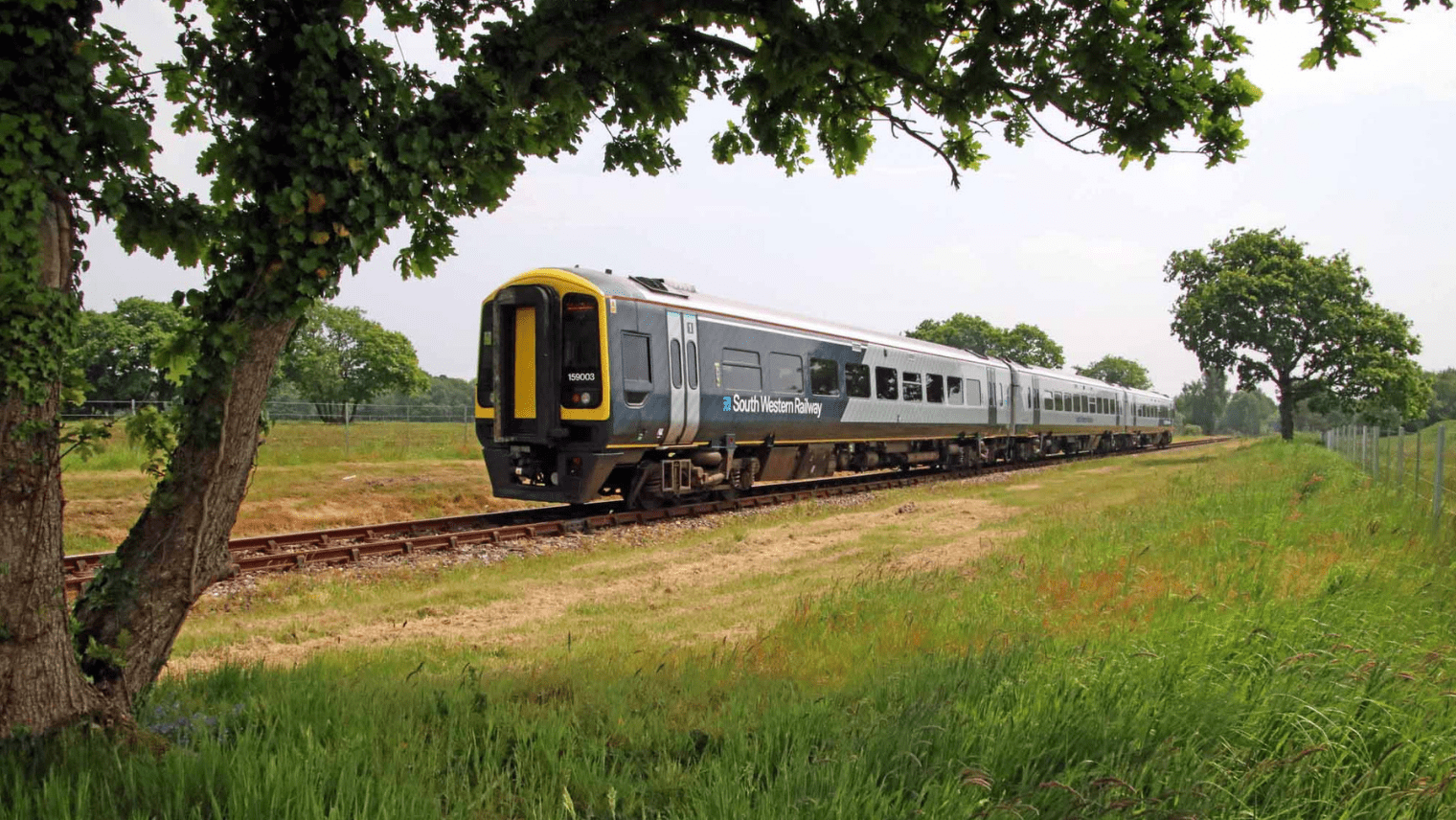
We are developing a long-term plan to modernise the West of England line, planning train services, the trains we use, and infrastructure modernisation, together in a ‘whole system’ approach that could include additional sections of double track to improve performance and resilience, and some additional services.
We are working closely with local stakeholders to refine the options, review potential third-party funding opportunities and enhance the various elements’ business cases.
We have developed a wide range of options and are carefully analysing each. The options with the strongest case – considering affordability, growth, decarbonisation, economic value and reliability – will be taken forward for further development in conjunction with the Department for Transport who, on Monday 28 September, published the Great British Railways rolling stock and infrastructure strategy.
Because the line serves a diverse range of communities and needs, there will need to be consensus amongst stakeholders about the options for further development.
We are now working with all our partners to align our long-term plan with this wider strategy, and because the line serves a diverse range of communities and needs, there will need to be consensus amongst stakeholders about the options for further development.
Alongside this we are continuing to invest in the maintenance of the line which includes provisional plans to replace signalling in the Salisbury area within the next 10 years.
On-board services
We are keen to understand what our customers’ priorities are for on-board services. We are conducting a survey until Friday 23 October centred around on-train catering which you can take part in here.
Station improvements
We have a rolling programme of station improvements, from re-painting stations to installing new facilities and customer information systems, and are working with local stakeholders to improve onward connections and accessibility.
Improving facilities
In 2025, alongside Wiltshire Council, we unveiled the newly remodelled forecourt at Salisbury, our flagship station on the West of England line and a key interchange with services to Bristol, Bath, Southampton and Portsmouth.
As part of a £5.5 million investment from the Future High Streets fund, the front of the station was transformed through extensive landscaping with new trees and shrubs, stylish street furniture and intuitive wayfinding, to create a more welcoming, accessible, and vibrant gateway to the historic cathedral city for visitors and residents.
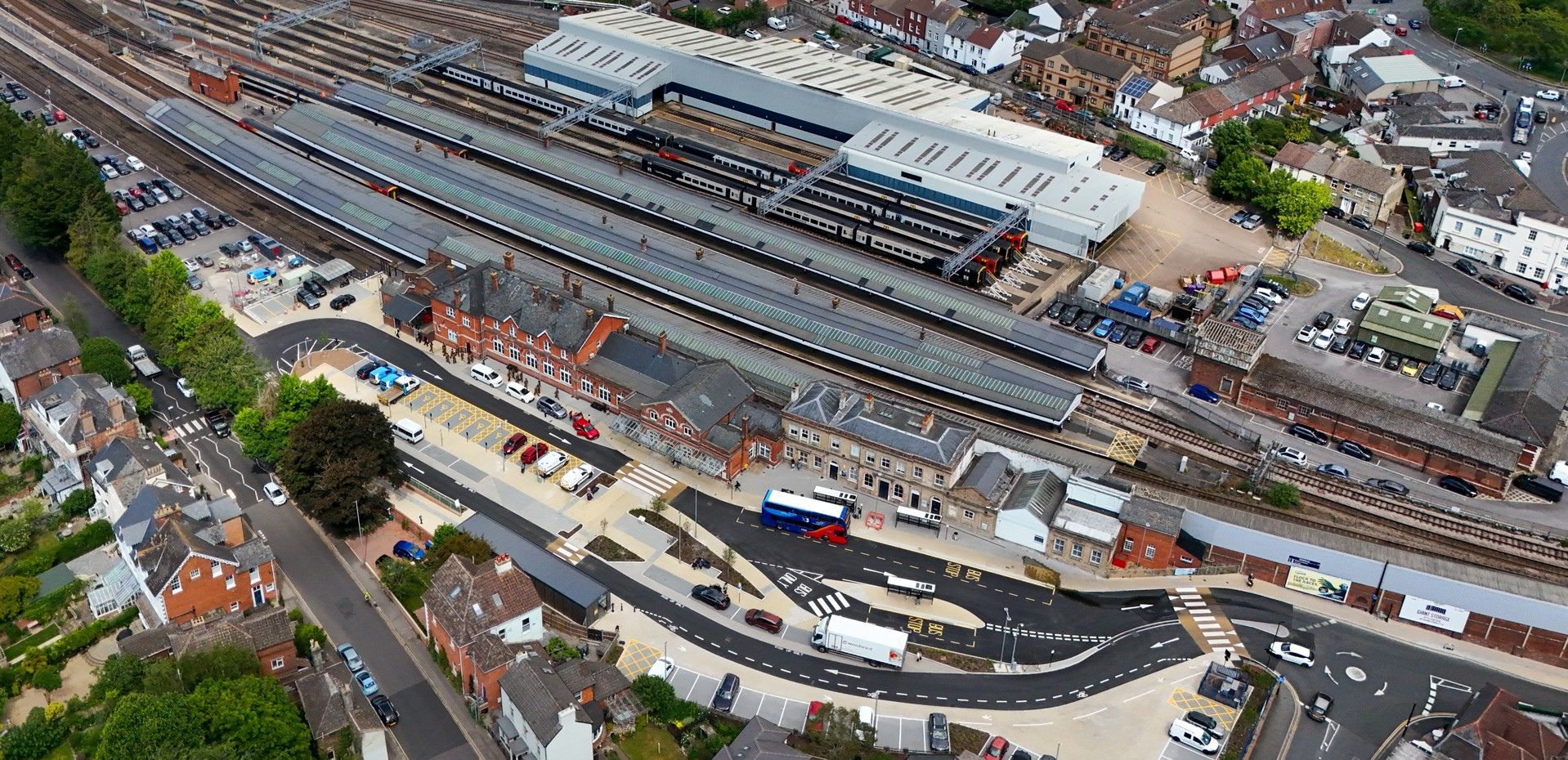
One of the major benefits has been the improved access for buses to the station alongside customer facilities including waiting shelters and real time information screens. This has led to new bus services at the station, and more are planned.
Also at Salisbury, we have recently refurbished the customer toilets on platform 4, while in the booking hall we have opened a new Gourmet Coffee shop. We understand our customers and stakeholders’ views on catering, which is why we are working closely with local businesses to improve options at our stations. The operator of the successful Railway Kitchen at Axminster has recently opened a branch at Honiton, with extended opening hours and an attractive range of food and drink. In the longer term, we are also looking carefully at the feasibility of on-board catering.
Further down the line we have repainted Gillingham, Honiton and Feniton stations, repainted the platform canopy at Axminster, and refurbished the waiting rooms at Gillingham and Feniton.
Improving customer information
We know how important it is to provide clear, easy to understand and easy to access information at our stations, which is why we have installed new customer information systems at four of our stations recently.
New customer information systems can be found in the booking hall and on platforms 2 and 3 at Salisbury, while at Honiton, Axminster and Yeovil Junction, we have installed new, interactive information totems.
Improving connectivity
In September 2025 we worked with Wiltshire Council and GWR to introduce a new on-demand bus service that connects Gillingham, Tisbury and Warminster stations to locations in South West Wiltshire including major attractions such as Stourhead (National Trust), Old Wardour Castle (English Heritage) and Longleat.
Axminster and Honiton are two of the key interchange points of a bus and rail integration programme we are developing on the Jurassic Coast. The comprehensive programme will include improved ticketing, new bus services and improved information, alongside wide-ranging promotional activity such as social media and an upgraded website.
Improving accessibility
As part of the Department for Transport’s Access for All programme, we are working with Somerset Council and other local partners on a detailed design for an accessible footbridge at Yeovil Junction.
Design work will begin in the autumn of 2026 with the aim of securing a decision from the Department of Transport in the spring of 2027 to proceed to construction.
An accessible gate has also been installed at Feniton.